Internationalization, Key to Boosting the Basque Industry
Orkestra–Basque Institute of Competitiveness has presented the Basque Country Competitiveness Report 2025, titled International Connection, Driver of Industry and prepared with the collaboration of the SPRI Group. The report highlights that the Basque Country starts from a solid position in competitiveness and well-being to face the new geopolitical context. It concludes that, in order to continue generating well-being, the Basque Country must move from a model based on traditional commercial openness to one of strategic internationalization. This involves diversifying geographic and technological risks, attracting and integrating high-quality foreign investment without losing the local anchoring of the region’s key companies, developing flows of international knowledge and talent, and strengthening strategic intelligence and European cooperation capabilities.
As Orkestra’s general director, James Wilson, pointed out, “the internationalization of the future will not only be about opening markets, but about weaving strategic connections that generate shared value.”
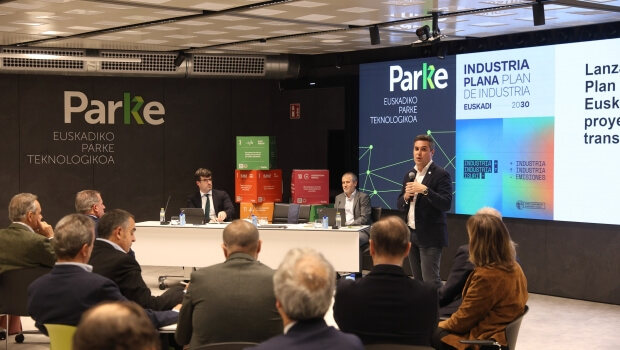
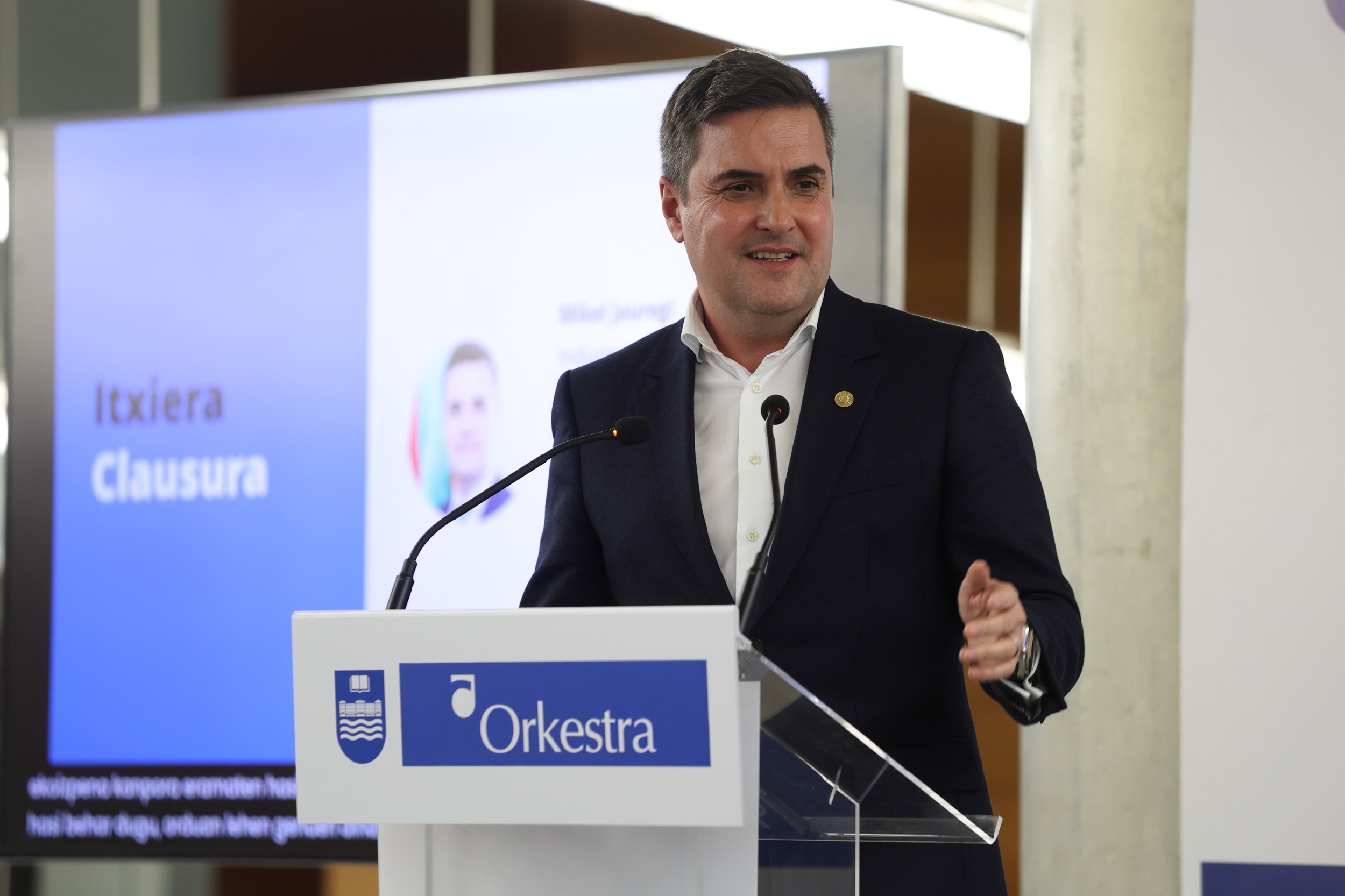
This idea was shared by the Minister for Industry, Energy Transition and Sustainability, Mikel Jauregi, who in his closing remarks emphasized that “from the Basque Government, and in line with the Industry Plan – Euskadi 2030, we highlight the need to internationalize our industry through productive deployments in key markets, as well as create new alliances with local partners. In the new commercial context, we will maintain our export vocation, but in a different way.” The Minister also stated that he agrees with the priorities outlined in the report and already reflected in the industry plan, such as strengthening business roots, attracting foreign investment, developing new talent, and increasing the size of SMEs.
Three International Connection Pathways Affecting Competitiveness
In an increasingly uncertain and fragmented global context, the report analyzes Europe’s and the Basque Country’s responses, clearly aimed at strengthening industry. Among them stands out the new Industry Plan – Euskadi 2030 of the Basque Government, aligned with major European Union strategies (Competitiveness Compass and Clean Industrial Deal), which seeks to position the Basque Country as a benchmark in reindustrialization, focusing on promoting more and better industry with fewer emissions.
According to Orkestra, the competitiveness and well-being of the Basque Country depend on its ability to maintain and transform its international connections in line with this new context. To this end, the report analyzes the three main international connection pathways that affect industrial competitiveness: commercial interdependencies, investment flows, and the mobility of people and knowledge.
1) New Trade Balances to Diversify Risks
The Basque manufacturing industry shows a high dependence on exports, close to 80% in the value chain of key sectors such as automotive, metallurgy, sustainable mobility, and advanced manufacturing. The Basque Country mainly exports medium-tech goods and maintains the EU-27 as its main trading partner, although it exports higher-tech goods to the United Kingdom, China, the United States, and the rest of the Americas. At the national level, the Basque Country stands out for the sophistication of its exports, offering a wide variety of products and facing little competition from other countries exporting the same goods.
Orkestra urges the diversification of international markets, both through new commercial relationships and by strengthening physical presence in those territories. The report also warns of dependence on imports, particularly energy and critical raw materials. In this regard, Orkestra recommends diversifying commercial risks through a broader variety of suppliers, strategic management of critical supply chains, and boosting connections between industry and advanced services.
2) A New Investment Paradigm to Transform and Root Industry
Foreign investments by Basque companies continue to exceed the foreign capital present in the territory, and the Basque Country accounts for more than 15% of Spain’s outward Foreign Direct Investment (FDI) stock. In a context where local presence is increasingly required—such as the Made in USA case—the report emphasizes the importance of strengthening direct presence in strategic markets. However, it highlights that between 2019 and 2023, inbound FDI stock grew by 12.6% annually, concentrating in manufacturing (38.3%) and energy (37.6%). Sixteen percent of business groups operating in the Basque Country have foreign parent companies, a figure that rises to 23% in manufacturing.
Orkestra stresses the need to accompany foreign investment attraction with rooting strategies, promoting participation in clusters and prioritizing investment linked to transformative projects. The report advocates an internationalization approach that ensures the return of knowledge, capabilities, and strategic functions to the Basque Country. These conclusions align with several priorities and actions set out in the Industry Plan – Euskadi 2030, especially regarding attracting investment for high-potential projects.
3) Promoting the Flow of People and Knowledge to Meet Business Needs
Attracting people with vocational and university training and integrating them into jobs aligned with their qualifications remains a challenge. Only 6.8% of university students are foreign, and fewer than half of immigrants with higher education hold jobs matching their training. International knowledge flows, however, show a positive trend: the Basque Country participates in a growing number of European projects, scientific publications exceed the European average, and patents with international collaboration are increasing—particularly with Germany, the U.S., and Canada.
In this regard, Orkestra proposes leveraging the full potential of Basque institutional structures abroad, strengthening synergies between talent-attraction initiatives, increasing the flow of international students through universities and vocational training centers, and fostering scientific-technological collaboration in strategic areas. The analysis is also linked to ongoing public policies focused on strengthening technical training, attracting specialized talent, and consolidating scientific-technological capacities essential for industry.
4) European Cooperation and Intelligence Mechanisms
These elements reinforce the need to promote European cooperation and improve strategic intelligence to anticipate global changes. Initiatives already underway include the creation in 2026 of an Advanced European Intelligence Office in Brussels, a transformative project designed to enhance anticipation and connection with European industrial initiatives. Coordination among clusters, delegations, and international offices can also help anticipate global shifts and strengthen relationships with the productive fabric in strategic locations.
Competitiveness and Well-being Assessment
The report presents the annual performance assessment, showing a strong position and positive evolution across key competitiveness indicators, except for exports, which have declined and reflect changes occurring in trade relations.
Well-being results are also generally positive, with some challenges identified in generating quality employment and access to housing. The evolution of all indicators is available and updated in real time in Orkestra’s Competitiveness Observatory.