Mikel Jauregi: “The Bilbao Declaration is a commitment to a more European and more sustainable automotive sector”
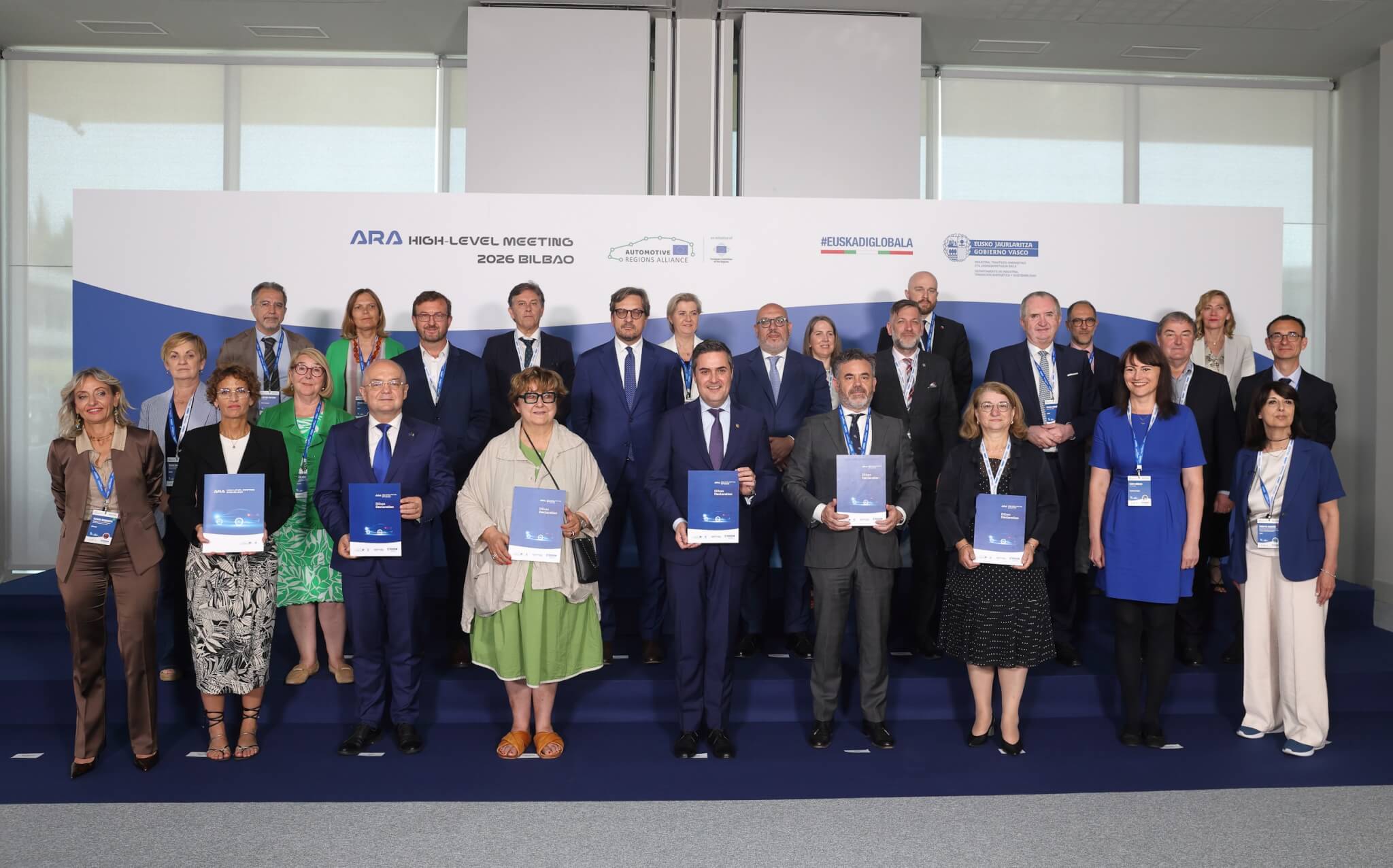
- The 41 regions of the Automotive Regions Alliance (ARA) have approved the so-called “Bilbao Declaration”, which calls for regions to play a leading role in European industrial policy; a commitment to “Made in Europe” and local content in the automotive sector; and, finally, technological neutrality to reduce emissions.
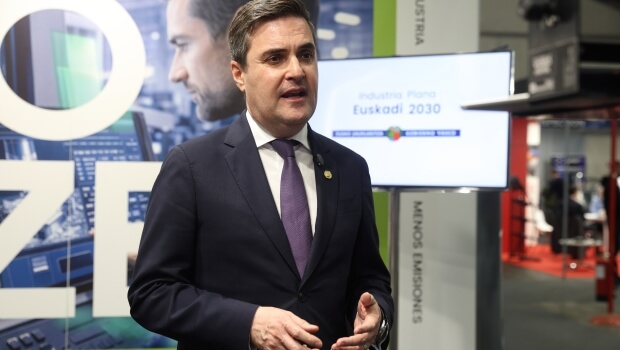
- Jauregi argued for local content in the European automotive industry as a means of supporting IRABAZI, the automotive components industrial initiative under the Industry Plan – Euskadi 2030. “We know that Chinese manufacturers are going to produce cars in Europe, but they must do so using locally manufactured components. And, in our case, Chinese cars with Basque parts.”
- The Regional Minister stressed the “need for technological neutrality to reduce emissions, combining electric cars with hybrids and vehicles powered by renewable fuels”.
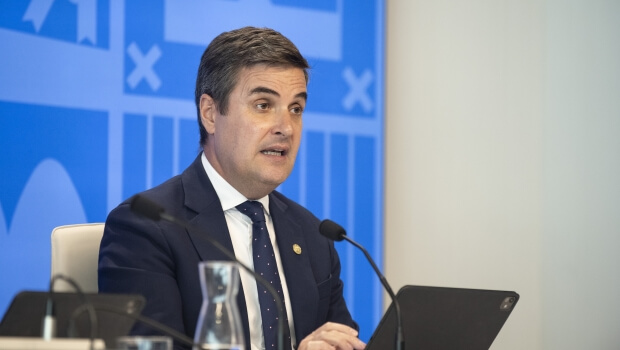
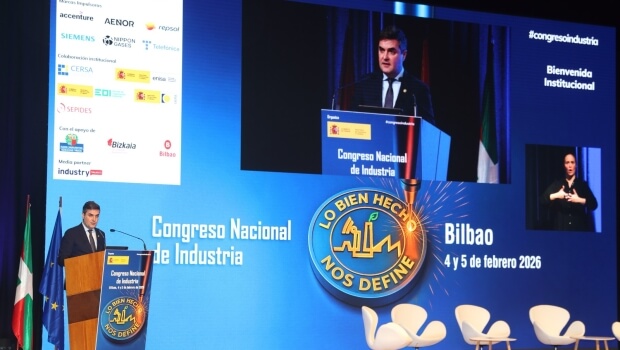
The Basque Government’s Regional Minister for Industry, Energy Transition and Sustainability, Mikel Jauregi, highlighted “the strength of Europe’s industrial regions, including Euskadi, in reinforcing ‘Made in Europe’. Jauregi today opened the plenary session of the Automotive Regions Alliance (ARA), held at the headquarters of the AIC–Automotive Intelligence Centre in Amorebieta.
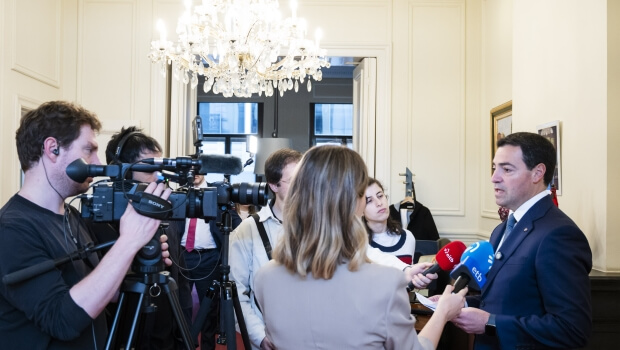
Jauregi stated that “Europe’s leading automotive regions are making a twofold commitment: we are Europe’s industrial base and we believe in an open Europe. We welcome the establishment of foreign automotive manufacturers in Europe, but under the same rules of the game: local content and technological neutrality. The Bilbao Declaration calls for regions to play a leading role in European industrial policy; a commitment to ‘Made in Europe’ and local content in the automotive sector; and, finally, technological neutrality to reduce emissions. It is a commitment to a more European and more sustainable automotive sector.”
In this context, the Declaration also calls for the co-design and co-implementation of European industrial and investment instruments together with automotive regions. It also underlines the strategic importance of talent, supporting the objectives of the Roadmap for Quality Employment and the forthcoming Quality Employment Act, as well as the integration of gender equality as a structural criterion in labour policies for the sector.
Jauregi argued for local content in the European automotive industry as a means of supporting IRABAZI, the automotive components industrial initiative under the Industry Plan – Euskadi 2030. “We know that Chinese manufacturers are going to produce cars in Europe, but they must do so using locally manufactured components. And, in our case, Chinese cars with Basque parts.” “This is what will truly help protect and develop the automotive components industry, which is critical in Euskadi, a strategic sector for us on which 40,000 jobs depend,” he stressed.
The Regional Minister also stressed the “need for technological neutrality to reduce emissions, combining electric cars with hybrids and vehicles powered by renewable fuels”.
In addition, he reiterated the commitment set out in the Munich Declaration to greater flexibility regarding the 2035 deadline for the manufacture of internal combustion engine vehicles. He defended technological neutrality in incentives for the purchase of lower-emission vehicles and called for guarantees that the transition of the automotive sector will consolidate production, investment and value chains in Europe.
“We need new incentives to drive this smart decarbonisation,” Jauregi added, “and regions have a fundamental role to play in experimenting with new policies and incentives, as well as in sharing good practices with other institutions, especially the European Commission.”
As he already stated during his intervention at the ARA meeting held in Munich in September last year, the Regional Minister for Industry today reiterated the central role that European regions must play “because we are close to our industries, we understand their challenges and potential, and we can act quickly and effectively. We are the ones closest to the 30 million people working in this sector”.
Bilbao Declaration
The 41 regions of the Automotive Regions Alliance (ARA) have approved the Bilbao Declaration, a joint political position on the two initiatives that will shape the immediate future of the sector: the Industrial Accelerator Act and the Automotive Package. ARA considers the Industrial Accelerator Act to be a key instrument for strengthening European value chains, reducing strategic dependencies and supporting the long-term competitiveness of automotive ecosystems across the European Union.
In essence, the Declaration supports the introduction of “Made in EU” requirements, provided that they are specific, proportionate and robust, offer legal certainty, avoid undue burdens on SMEs and regional supply chains, and remain compatible with the European Union’s international commitments. The Alliance’s regions stress that the Industrial Accelerator Act will only achieve its full potential if it is aligned with the Automotive Package, the Automotive Action Plan and the broader regulatory framework. They therefore call for a comprehensive assessment of the implementation of the Automotive Package and its interaction with the Industrial Accelerator Act, to ensure that the overall framework remains fit for purpose.
Regarding the technological dimension of the transition, ARA reaffirms the principle of technological neutrality as a guiding criterion for regulatory measures. The Alliance supports the European initiative on small and affordable electric vehicles as a tool to make zero-emission mobility accessible to all European citizens. At the same time, it emphasises that support for the transition should not rely exclusively on this initiative, preserving manufacturers’ ability to offer a diverse, demand-driven vehicle portfolio. The Declaration also calls for an assessment, before 2035, of the role and effectiveness of sustainable renewable fuels, including biofuels, in line with the principle of technological neutrality and the objective of climate neutrality by 2050.
Bilbao Declaration (full text)
Automotive Regions Alliance (ARA)
The Automotive Regions Alliance (ARA) is a network promoted within the framework of the European Committee of the Regions, bringing together regions with a strong automotive industry presence. It is a platform for interregional political cooperation focused on European industrial policy in the automotive sector and acts as an interlocutor with the European Commission, Member States and other institutions and industrial alliances.
ARA’s objective is to ensure that the transition of the European automotive sector does not weaken the industrial base, takes account of different territorial realities and protects jobs and European supply chains. In short, it seeks to ensure that the transition is competitive, fair and balanced across regions.
At present, Euskadi holds the vice-presidency of ARA, while Grand Est (France) holds the presidency.
The Bilbao meeting, originally intended as preparation for the annual assembly to be held in Valencia in September, has gained particular relevance as it coincides with the publication of the European Automotive Package in December and the Industrial Accelerator Act. Both initiatives were discussed during the meeting, which concluded with the adoption of a joint final declaration entitled the Bilbao Declaration.
The plenary session was attended by the President of Navarre
Following Jauregi’s opening remarks, speeches were delivered by Brigitte Torloting, Vice-President of Grand Est; Andriana Sukova, Deputy Director-General of DG Employment; and Emil Boc, Mayor of Cluj-Napoca (Romania) and Chair of the COTER Commission of the European Committee of the Regions. Emil Boc served as Prime Minister of Romania between 2008 and 2012. The keynote address was then delivered by Andriana Sukova, Deputy Director-General of DG Employment.
This was followed by a session focusing on the position of the regions regarding the Industrial Accelerator Act (IAA), featuring a round of brief interventions from various territories. The institutional debate continued with contributions from key figures such as Christophe Grudler, the European Parliament’s rapporteur on the IAA, and María Chivite, President of the Government of the Chartered Community of Navarre, who addressed different perspectives on industrial policy and the European automotive sector.
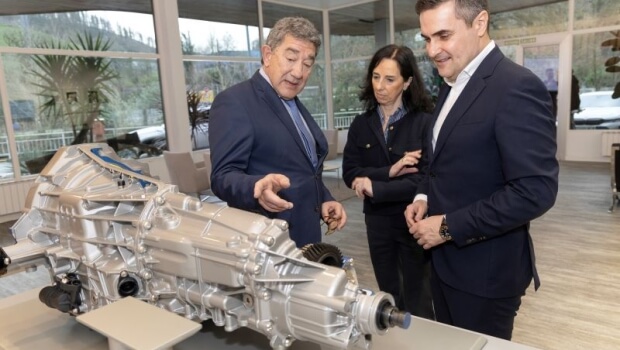
The final part of the programme featured a thematic panel in which the views of industry clusters were gathered, followed by conclusions and the closing session. The event concluded with a visit to the Automotive Intelligence Centre, a European open innovation centre focused on technological development, talent and sustainable mobility within the automotive sector.