Materials 4.0: the BDIH and the circular economy
Innovation in Materials has historically provided the Basque industry with significant advances in the development of new products and in the improvement of existing production processes. Currently, and over the next few years, innovation in Advanced Materials will be the core around which the incorporation of new functionalities and the improvement of their properties will revolve, providing greater added value to the products and processes of Basque SMEs, without losing sight on sustainability.
Sustainability is interrelated with the circular economy, an economic concept where the value of products, materials and resources (water, energy…) are maintained in the economy for as long as possible, and where the generation of waste is reduced to a minimum. The aim is to implement a new economy, circular and non-linear, based on the principle of “closing the life cycle” of products, services, waste, materials, water and energy. At present, the circular economy in the Basque Country represents 1.12% of the GDP, with an annual gross income of €764m, according to the report “Diagnosis of the Circular Economy in the Basque Country Industry“.
According to this report, if more innovative circular solutions were implemented, it is estimated that there would be an average potential saving of 6% in the consumption of raw materials, which would mean savings of €2bn for Basque industry. The metal (steel, casting, metal products) and mobility (automotive, aeronautics) sectors would accumulate half of the potential savings of Basque industry.
This article is dedicated to those Basque SMEs interested in reducing the consumption of raw materials and finding alternatives and promoting their recycling and reuse.
The SPRI Group, together with the BDIH, combines in its Advanced Materials Node capabilities that offer services focused precisely on the sustainability needs of SMEs. These services support the industrial fabric in eco-design tasks and life cycle analysis of components, to respond to the challenges of sustainable development, and help to extend the life of materials and determine their recyclability.
For example, TEKNIKER is developing materials with several added functionalities, which could be candidates for adaptation and application in the generation of anti-viral surfaces, to help and protect in the fight against the COVID-19 disease. These new functionalities do not modify the life cycle of the final product and in some cases they even extend it. These materials are developed, among others, from its active Laser surface texturisation of industrial components with 3D geometry, allowing the manufacture of industrial components with 3D surfaces characterized by a texture at the micro and submicrometric scale that gives the component an antimicrobial character against different bacteria.
CEIT, on the other hand, opens the possibility of producing complex components by optimizing the use of material, combining several apparatus and tools in its Near Net Shape Pilot Plant, where large, medium and small components can be produced using the most appropriate techniques. This asset also offers the possibility of adjusting performance by means of heat treatments and specially designed powder coatings.
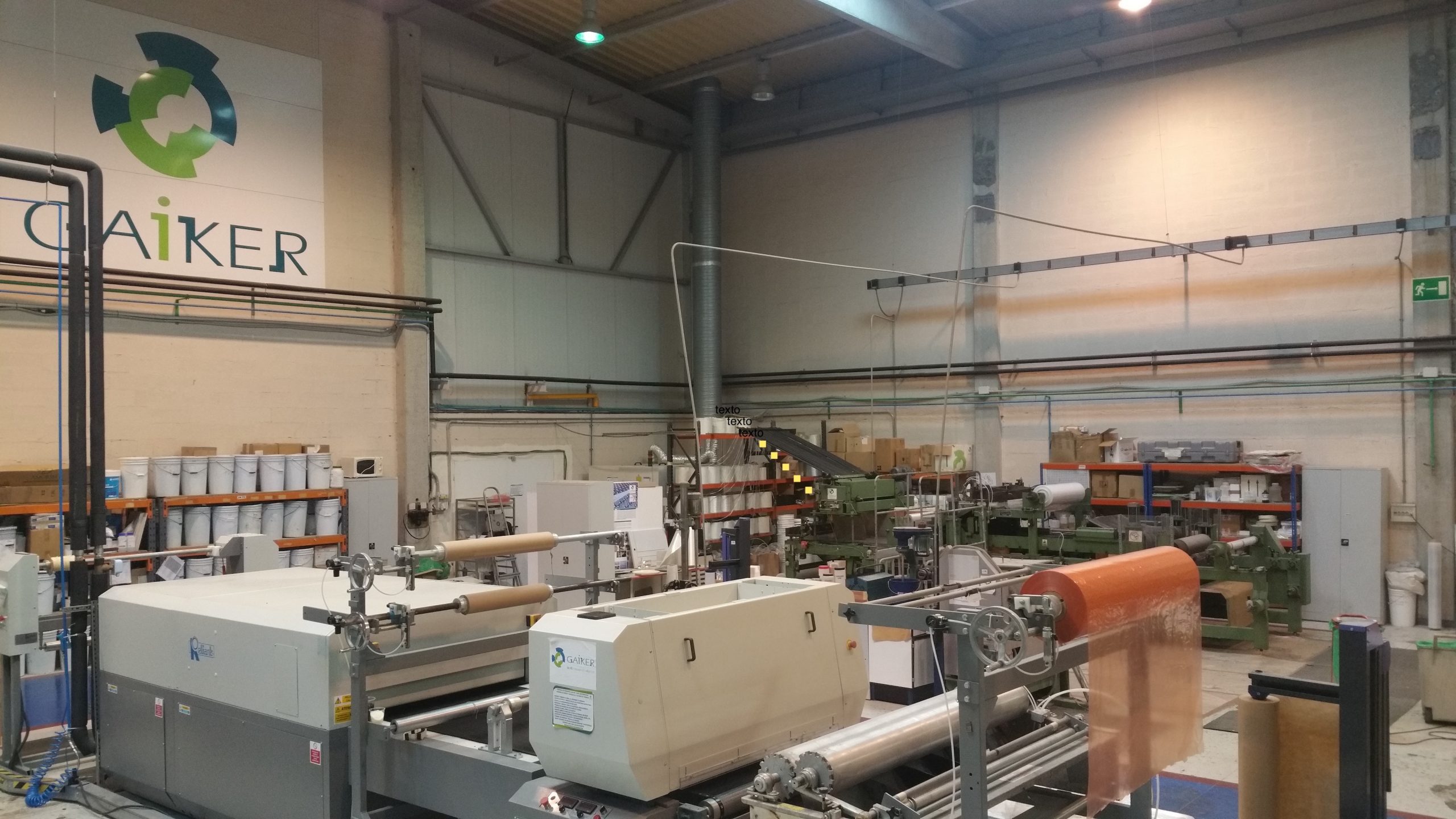
GAIKER, from its Plastic and Composite Materials Manufacturing Unit, offers services for the circular economy of development and implementation of post-process recycling systems for plastic and composite parts and waste, development of products based on recycled carbon, analysis of the recyclability of product materials in all their phases, eco-design focused on optimising the circularity of materials, and evaluation of the sustainability of materials, processes and products from the perspective of life cycle analysis. These services have been put into practice with companies in the context of various R&D projects in different industrial sectors.
TECNALIA has got various assets related to the circular economy, although the Pilot Plant for the recovery of resources, the replacement of critical materials and the circular economy should be highlighted. These facilities (laboratory and pilot plants) for the development of recovery processes, based on hydrometallurgical, pyrometallurgical and ionic-metallurgical technologies and their combinations, make it possible to offer a solution to waste management problems. These actions are focused on the recovery of the high-value elements present in the wastes and which can be used as substitutes for conventional raw materials (metals of high economic value or critical metals, for example), or on the reuse of uncontaminated wastes after impurity removal treatment. This asset also includes installations specifically designed for the metallurgical industry for developments related to energy and resource efficiency and towards concepts of circular economy, such as new furnaces, new heating systems, new processes for the recovery of metals from waste, minerals or slag and processes for the recovery of energy from industrial waste.
The complete list of the assets of the advanced materials node that support these services can be accessed from the BDIH catalogue, can be visited, and can be tested with the technical teams to assess against the individual needs of each company, with the security of working with experts and state-of-the-art equipment.
The solutions presented in this article are an example of how the Advanced Materials Node of the BDIH helps companies to adapt their processes to technologies of greater added value, and more efficient both energetically and economically and in terms of the materials used.
If you are interested in deepening your knowledge of what the Advanced Materials Node of the BDIH offers, follow this series of articles on Materials 4.0 where we tell you in detail which are the capacities, assets and services of the node in a practical, applied way.
And contact the BDIH to find out how we can bring your company closer to the solutions that interest you most.
[1]https://www.euskadi.eus/contenidos/documentacion/economia_circular/es_def/adjuntos/EstrategiaEconomiaCircular2030.pdf