
The Lehendakari leads a trade mission to Toulouse to strengthen Basque industry’s presence in the European aerospace sector
The Lehendakari, Imanol Pradales, is leading an institutional and business mission from Euskadi to Toulouse this week to strengthen cooperation with Occitanie and open new opportunities for the Basque aerospace industry in one of Europe’s main aeronautical and space hubs. The mission follows the meeting held by the Lehendakari and the President of Occitanie, Carole Delga, in Paris on 18 November 2025, where the initiative to organise a Basque business and institutional visit to Occitanie’s aerospace sector emerged.
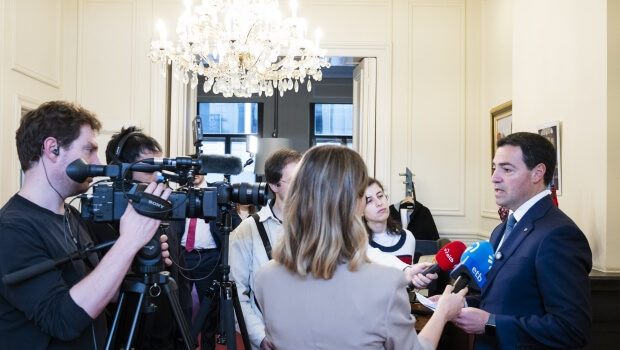
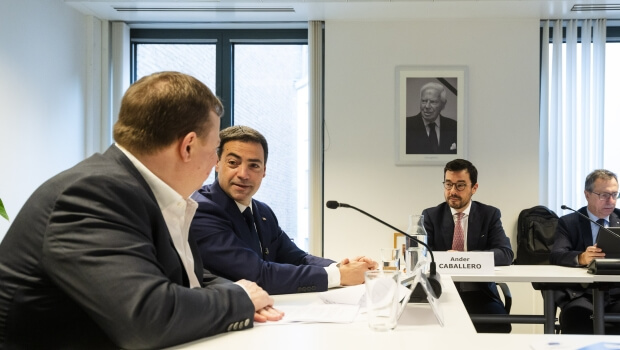
The Lehendakari is therefore leading a trade mission in Toulouse that includes a visit to Airbus’s facilities in Blagnac, a bilateral meeting with Carole Delga, and an institutional meeting with representatives of both delegations and the business community.
The mission includes 23 representatives of Basque companies and organisations, accompanied by the Basque Government’s Department of Industry, headed by its Minister, Mikel Jauregi. Its objective is to encourage contact between the industrial ecosystems of both territories, facilitate new opportunities for collaboration within major manufacturers’ supply chains and promote joint innovation and research projects.
In addition to its economic dimension, the visit aims to deepen bilateral relations and broaden cooperation to other areas of shared interest. Both territories participate in cross-border cooperation frameworks such as the Working Community of the Pyrenees and the European POCTEFA programme.
The Basque Government thus seeks to consolidate a stable relationship between public administrations, companies, clusters and technology centres that will turn the contacts made during this mission into new opportunities for industrial collaboration, innovation and economic development.
The visit to Airbus also provides an opportunity to see the company’s facilities and its A321 final assembly line, as well as to exchange views on supply chain needs and opportunities for innovation. The visit provides an opportunity to address the role Basque companies can play in meeting the production capacity, competitiveness and resilience challenges facing the European aerospace industry.
Creating new opportunities
Following the institutional day led by the Lehendakari, the business delegation will continue its programme on 20 and 21 October, coordinated by the Department of Industry and SPRI’s Basque Trade & Investment, in collaboration with the Occitanie Region and sector organisations.
The agenda includes visits to world-leading aeronautical companies such as Safran and Liebherr-Aerospace, as well as meetings with Aerospace Valley, the IRT Saint Exupéry technology institute, PAD’OCC and Thales Alenia Space. The programme will provide first-hand insight into the industrial and technological capabilities of the Occitanie ecosystem and identify areas of interest for future business collaborations and R&D projects.
The delegation brings together participants involved in advanced manufacturing, machine tools, aeronautical components and technological research, with the participation of companies, clusters and centres that are part of the Basque Research and Technology Alliance (BRTA).
Two complementary industrial ecosystems
Euskadi and Occitanie have complementary industrial capabilities and maintain a strategic relationship in aerospace. While Occitanie brings together major manufacturers and an aeronautical and space ecosystem with an international reach, Euskadi has a strong network of companies specialising in engines, aerostructures, components, machine tools, advanced manufacturing and space technologies.
The Basque aerospace sector, comprising 82 member organisations of the HEGAN cluster, recorded turnover of €3.413 billion and generated 15,133 jobs in 2025. Exports amounted to €2.896 billion, while investment in research and development reached €213 million.
Occitanie, for its part, has 817 companies linked to the aerospace sector and more than 110,000 people employed in this activity. The region therefore offers an environment of particular interest for expanding Basque companies’ trade relations and exploring new avenues for collaboration with major manufacturers, suppliers and research centres.
The mission seeks to build on this complementarity to strengthen European value chains, facilitate the participation of Basque companies in new industrial projects and reinforce technological cooperation between both territories.