
Euskadi pioneers the development of flexible manufacturing for the automotive industry in Europe
- The project will involve an initial public-private investment of €181 million over the next three years
- Imanol Pradales: “The race to make the factory of the future a reality is already underway, and Euskadi must fight to be among the best”
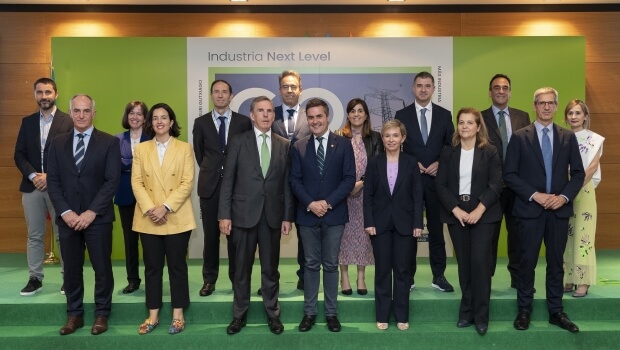
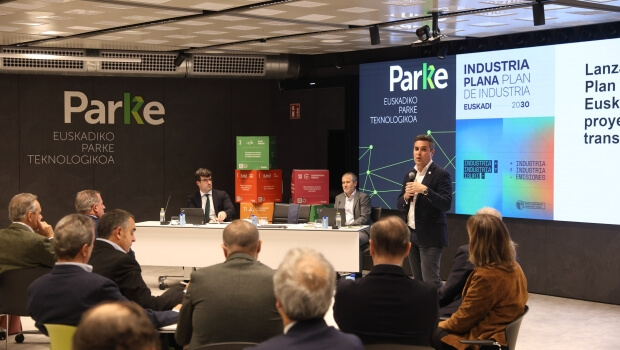
Lehendakari Imanol Pradales presented the Transformative Project ‘Fabricación Flexible de la nueva Automoción’ this morning at the Mercedes plant in Vitoria-Gasteiz, alongside the Basque Government Minister for Industry, Energy Transition and Sustainability, Mikel Jauregi. This project positions Euskadi as a pioneer in flexible automotive manufacturing at European level.
This new Transformative Project, promoted by the Basque Government, will enable the technological and sustainable transformation of the Mercedes-Benz plant in Vitoria-Gasteiz to manufacture the future models that will mark a new era for its Vans range. The new project involves an initial public-private investment of €181 million over the next three years, of which around €61 million will be allocated to R&D and technological development.
In addition to the launch of the Mercedes-Benz VLE model this year, the plant has several launches ahead and will need to continue preparing and investing to respond swiftly to market changes and competition.
Lehendakari Imanol Pradales stressed that “in Euskadi, we have our own way of doing things, based on closeness, public-private collaboration and innovation, which has enabled us to adapt our industrial and technological fabric and overcome very different crises. We must now renew that spirit as a country to defend our industrial base, build new competitive advantages, complete value chains, develop our own products and turn the digital and energy transitions into industrial opportunities. The race to make the factory of the future a reality is already underway, and Euskadi must fight to be among the best. To do so, we need more decision-making centres, larger companies, greater technological intensity and a decarbonised industry that does not lose competitiveness. And Europe must make the right decisions to protect its market and its industry.”
Bernd Krottmayer, Director of Mercedes-Benz Vitoria, emphasised: “We invest in Vitoria because we want to ensure that our plant remains one of the most competitive in the Mercedes-Benz group. To achieve this, the flexibility of our facilities and processes is key, as it allows us to adapt more quickly to market changes.”
For his part, the Diputado General de Álava began by highlighting the role of Mercedes Benz during its seven decades in the territory: “It is one of the major industrial assets, and its impact extends beyond the factory itself, reaching 40,000 direct and indirect jobs. Its investments therefore allow us to look to the future from the privileged position of leading the transformation of the automotive sector in Europe, a transition that involves electrification.” At this point, Ramiro González referred to the right approach being taken to making this change. “This is precisely what Mercedes is doing today with this transformative project. Investments such as those it is making enable progress towards an increasingly flexible manufacturing model, prepared to respond to technological developments in the sector and changes in demand.” At this point, Ramiro González referred to the transformative nature of the project and the need to prepare the factory to respond to market developments with flexibility and technological neutrality. The Diputado General concluded by expressing his conviction that “these new investments will allow us to continue writing the future of Álava, Euskadi and their industry together.”
This Transformative Project addresses one of the main challenges facing the European automotive industry: developing production systems capable of adapting more quickly to technological developments, new vehicle architectures and market needs.
The new VLE vehicles replace the EQV model, incorporating structural improvements, new electronic functions, advanced technologies and state-of-the-art safety systems, with a high-end portfolio, 100% newly designed parts and a technological leap unprecedented in Euskadi for the mid-size VANS segment.
The development of more flexible and adaptable manufacturing processes will strengthen the plant’s ability to respond to changes in the product range and the market, while also helping to consolidate workload prospects at Mercedes Vitoria.
Mercedes-Benz Vitoria will lead a project involving 11 Basque companies, nine of them SMEs, with the participation of members of the Basque Science, Technology and Innovation Network, led by Tecnalia, and the ACICAE cluster, as well as the collaboration of the BAM R&D unit. This collaboration will combine Euskadi’s existing industrial, technological and knowledge capabilities to develop new processes and solutions applicable to the manufacture of the next generation of vehicles
Of the 25 Transformative Projects, 18 have now been launched: seven led by the private sector and 11 by the public sector
The Industry Plan – Euskadi 2030 set out 23 publicly and privately led Transformative Projects. Two new privately led Transformative Projects have since been added: “Zero Emissions Marine Boat” and “Hidrogeles inteligentes para Nanomedicina”.
The Industry Plan is a dynamic plan under which the Transformative Projects are developed, so further projects are expected to be added as industrial needs evolve.
In total, 18 of the current 25 Transformative Projects have now been launched: 11 led by the public sector and seven by the private sector.
The publicly led projects are: ESG Euskadi; Euskadi: Climate Change adaptation living lab; Euskadi SpaceLab (ESA BIC); Desarrollo Energías Renovables; Mejora de los procesos administrativos (Autopista Regulatoria); Reserva estratégica de suelo industrial e infraestructuras; Fondo Scale Up; Euskorpus; Basque Zirkular Metals; Planificación de las redes eléctricas vascas; and Emakumea Industriara.
The six privately led projects presented before the Mercedes-Benz Vitoria project are: “Nuevas Arquitecturas de Motor Aeronáutico para la Aviación Sostenible y Competitiva en Euskadi”; “ROBOOST”; “Hidrogeles Inteligentes para la Nanomedicina Personalizada”; “Hub de Combustibles Renovables”; “Grid4Industry”; and “Zero Emissions Marine Boat”.
These seven Transformative Projects represent an initial investment of more than €860 million, of which €429 million is allocated to R&D and technological development. Together, the seven projects will create more than 3,850 quality jobs in the coming years. They will also generate activity for another 171 companies — most of them SMEs — in the Basque industrial sector, with the collaboration of the country’s Technology Centres.